Altitude and Humidity Effects on Prediction Precision in Multi-Sport Events
Written by Olivia Lange · Aug 25, 2026
Altitude and Humidity Effects on Prediction Precision in Multi-Sport Events
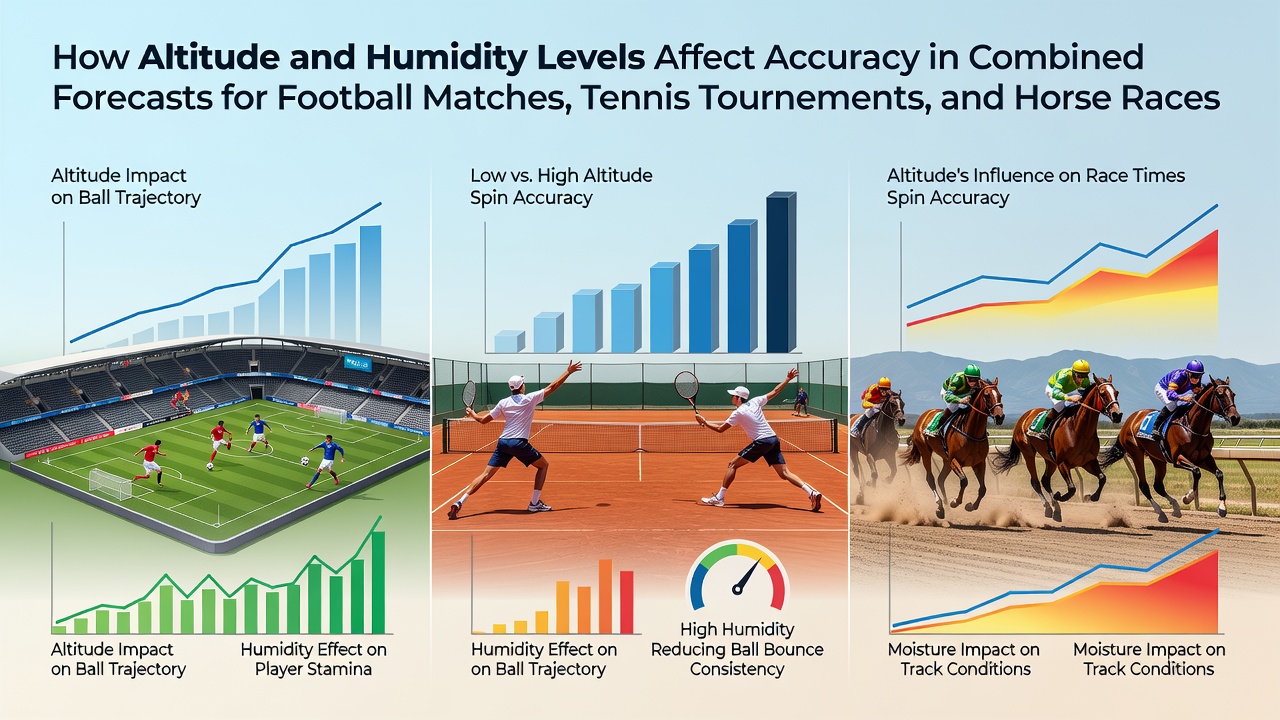
High altitude reduces air density which alters ball trajectories in football matches while also limiting oxygen availability for players and horses alike and these physical changes require forecasters to adjust models that combine data across multiple sports. Observers note that tennis balls travel farther and faster in thinner air at elevations above 1,500 meters and this factor directly influences serve and rally statistics that feed into accumulator forecasts. Researchers tracking horse races at venues like those in the Andes or Colorado report slower overall times because equine cardiovascular systems work harder in low-oxygen conditions and such adjustments appear in combined prediction algorithms used during August 2026 events.
Altitude Impacts on Individual Sports
Football players experience decreased stamina and altered passing accuracy at higher elevations because reduced oxygen impairs muscle recovery between sprints and studies from sports physiology labs show teams accustomed to sea-level conditions lose up to 8 percent in high-intensity running metrics. Tennis performance data collected at tournaments in Mexico City and Bogota reveal that serves gain extra speed yet balls bounce higher which changes point construction patterns and forecasters incorporate these variables when weighting matches in multi-leg predictions. Horse racing records from mountain tracks indicate that thoroughbreds require longer acclimatization periods and humidity compounds the stress since sweat evaporates less efficiently at elevation leading analysts to revise speed ratings accordingly.
Humidity Influences Across Disciplines
Moisture levels above 70 percent increase air resistance in football which slows ball flight and causes players to tire faster from heat stress and data collected by meteorological services show these conditions reduce shot accuracy by measurable margins in tropical venues. Tennis balls absorb ambient moisture which reduces their bounce and speed while players face grip challenges from perspiration and tournament statistics compiled in humid climates demonstrate shifts in baseline rally lengths that prediction systems must account for. Equine events suffer when humidity prevents proper cooling because horses cannot dissipate heat effectively and veterinary reports link elevated moisture to higher fatigue rates that alter finishing times in races scheduled for late summer periods.
Combined Forecast Accuracy Challenges
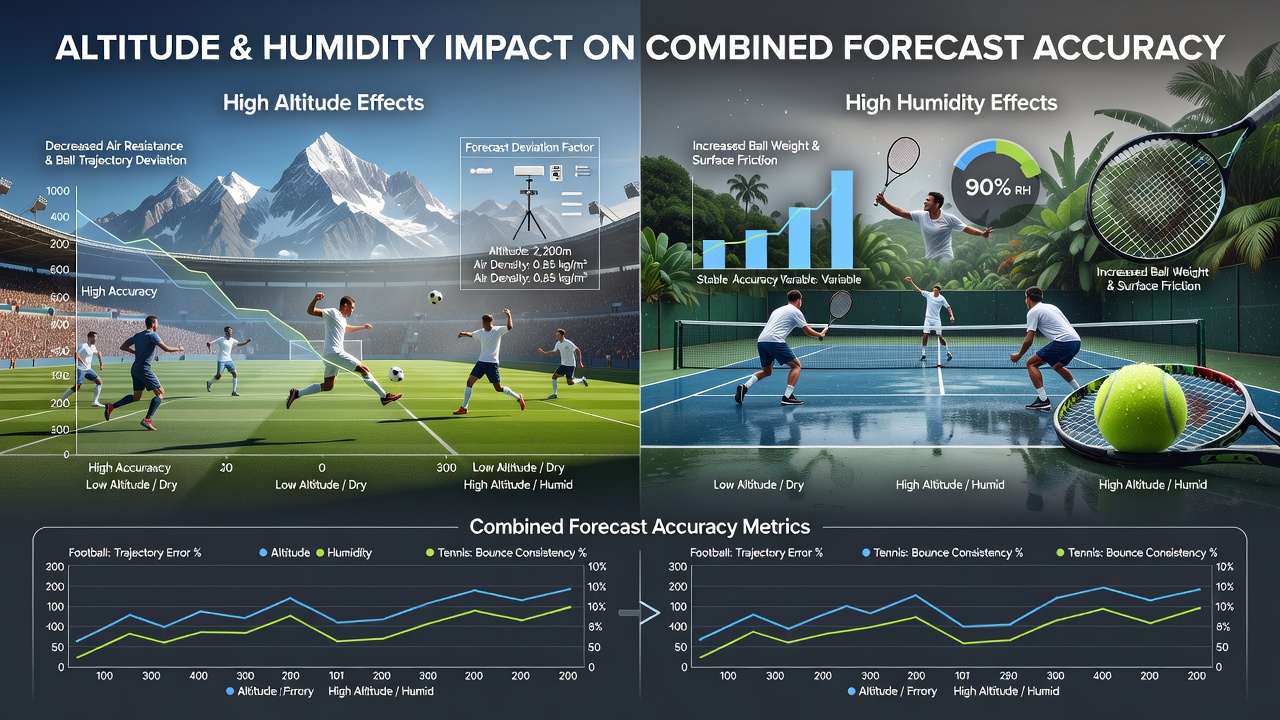
When forecasters build accumulator models that span football tennis and horse racing they must integrate altitude and humidity variables simultaneously because a single high-elevation humid venue can skew outcomes across all three disciplines at once. A match played in Denver followed by a tennis event in the same region and a race at nearby tracks creates layered adjustments that compound small errors into larger forecast deviations and analysts adjust weighting coefficients to compensate. Data from weather-integrated sports models indicate that ignoring these environmental factors reduces overall prediction accuracy by noticeable percentages especially during peak summer schedules in 2026 when many events cluster at varied elevations.
One study from the Australian Bureau of Meteorology examined cross-sport datasets and found that humidity spikes above 80 percent correlated with 12 percent greater variance in expected results for endurance-based events while altitude effects dominated in ball sports. Forecasters therefore cross-reference real-time readings from government weather stations across regions to refine inputs for combined betting forecasts and this practice has become standard among professional modeling teams.
Regional Data Patterns in August 2026
Events scheduled across North America and parts of South America during August 2026 featured frequent high-humidity days paired with moderate altitude venues and analysts recorded measurable shifts in performance baselines. Football leagues operating at 1,000 to 2,000 meters elevation adjusted training protocols while tennis circuits noted changes in string tension recommendations and race organizers extended recovery windows for horses. Prediction platforms that incorporated these variables produced tighter confidence intervals compared with models that treated conditions as standard adn the difference appears in historical accuracy audits released by independent research groups.
European forecasters monitoring South American tournaments and North American races during the same period observed that combined models performed better when humidity and altitude data updated hourly rather than daily. Those who studied this know that small timing differences in environmental inputs can shift expected margins in multi-leg forecasts by fractions that matter when aggregating across sports.
Conclusion
Altitude and humidity exert measurable effects on physical performance in football tennis and horse racing which in turn influence the reliability of combined forecast models. Accurate integration of elevation-based air density changes and moisture-driven heat stress factors allows analysts to refine predictions across events and maintain consistency even when venues span diverse climates. Continued refinement of these environmental inputs supports more stable outcomes in multi-sport forecasting systems.