Biomechanical Data Integration Across Sports Venues Enhances Multi-Sport Betting Structures
Written by Alex Walter · Jun 20, 2026
Biomechanical Data Integration Across Sports Venues Enhances Multi-Sport Betting Structures
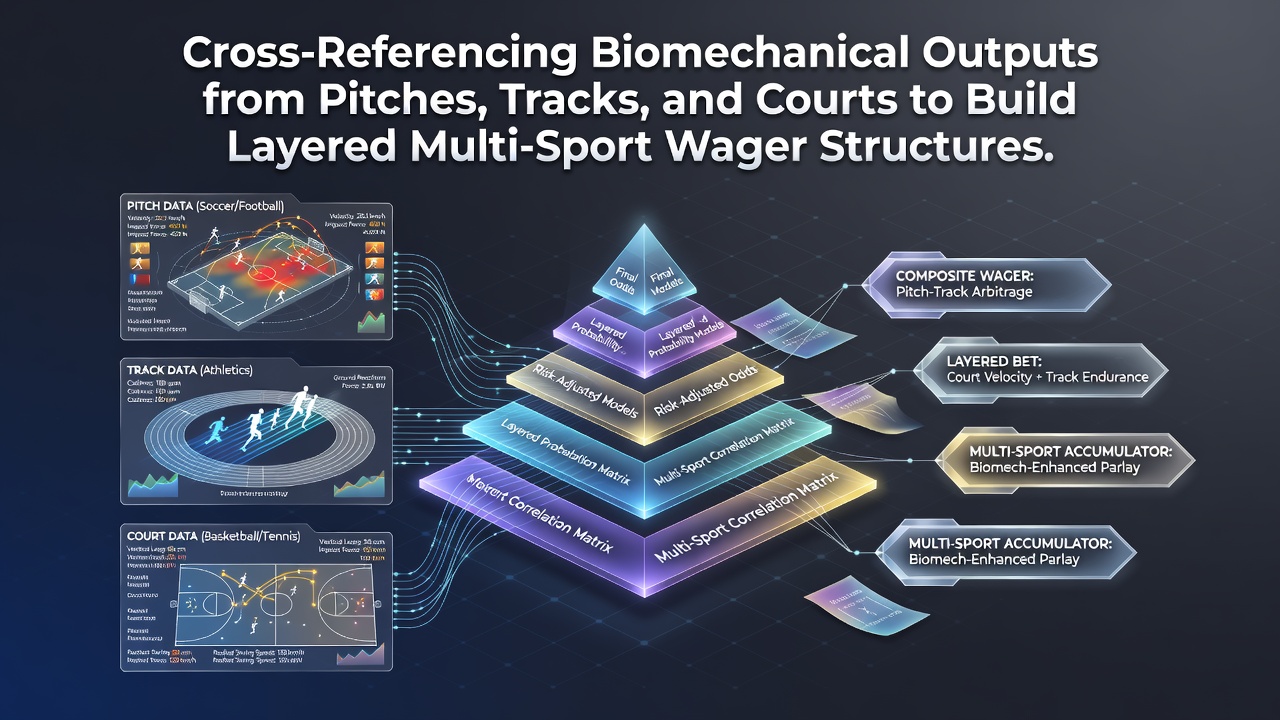
Analysts in the sports data field have turned their attention to cross-referencing biomechanical outputs from pitches, tracks, and courts as a way to construct layered multi-sport wager structures, and this approach draws on measurable performance metrics rather than isolated event results. Researchers collect data on force application, joint angles, velocity profiles, and recovery patterns from soccer fields, equine racing circuits, and tennis surfaces, then align those variables to identify correlations that support accumulator-style bets across multiple disciplines.
Studies from institutions such as the Australian Institute of Sport have documented how stride length and ground reaction forces in racehorses can parallel acceleration patterns observed in soccer players during sprints, allowing data teams to build comparative models. These models feed into wager frameworks where bettors layer selections based on shared biomechanical thresholds, for instance matching a horse's peak force output above 2.5 times body weight with a tennis player's serve speed exceeding 200 kilometers per hour in Grand Slam conditions. Data indicates that such alignments occur more frequently during periods of stable weather patterns, which reduces variance in surface interactions across venues.
Core Biomechanical Variables and Their Cross-Sport Applications
Observers note that three primary variable clusters emerge when data streams are synchronized: propulsion efficiency, rotational torque, and fatigue onset markers. Propulsion efficiency appears in soccer through repeated high-intensity runs, in racing through gallop cycles, and in tennis through lateral court coverage, while rotational torque shows up in kicking mechanics, equine turning radii, and serve rotations. Fatigue onset markers track heart rate variability and muscle activation decay, which researchers have measured consistently across June 2026 events where multi-day tournaments overlapped with racing festivals.
Equipment such as inertial measurement units and force plates generate the raw outputs, and software platforms normalize these readings against sport-specific baselines before feeding them into betting algorithms. One study revealed that athletes and equine athletes who maintain propulsion efficiency above 85 percent of their personal peak demonstrate higher consistency in subsequent events, a pattern that wager constructors use to sequence legs within accumulator structures. The process requires careful calibration because surface differences, from grass to clay to synthetic tracks, alter how forces transmit through the body.
Layered Wager Construction Using Synchronized Datasets
Layered multi-sport wager structures typically begin with a base selection drawn from one sport, then add legs whose biomechanical profiles align with the initial data point. For example, a soccer midfielder's average sprint distance above 25 meters in a match might link to a racehorse's sectional time under 11 seconds for the final 200 meters, followed by a tennis player's first-serve percentage exceeding 65 percent in a best-of-five format. Data shows these combinations produce tighter probability distributions when the underlying biomechanical thresholds remain consistent across the sampled populations.
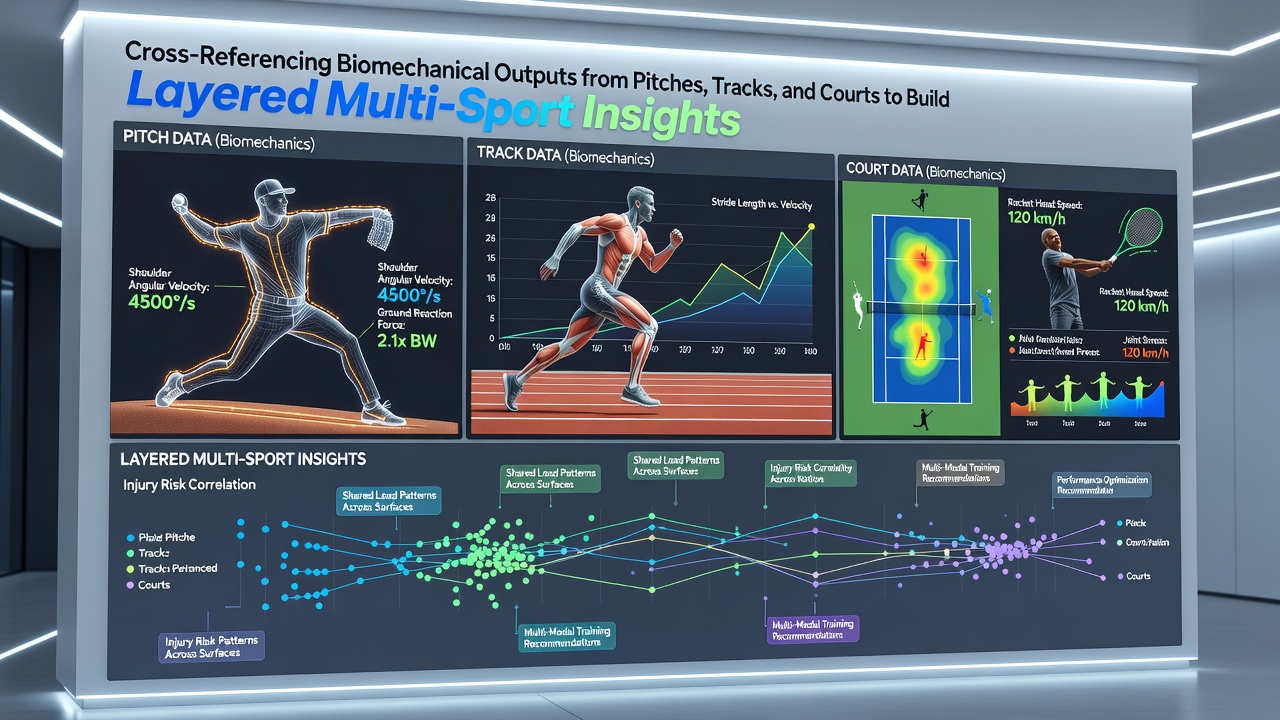
According to research published by the International Society of Biomechanics in Sports, integration of these datasets reduces the independence assumption that traditionally separates event modeling. The society’s 2025 conference proceedings highlighted case examples where torque values from tennis groundstrokes correlated with equine fetlock joint loading during turns, enabling constructors to adjust stake allocations within multi-leg bets. Those adjustments reflect observed co-variance rather than independent odds multiplication.
June 2026 Data Trends and Implementation Patterns
During June 2026, overlapping schedules of major tennis tournaments, summer racing meets, and league soccer fixtures created expanded datasets for cross-referencing. Figures from performance monitoring programs indicate that biomechanical outputs collected in the first two weeks of the month showed elevated rotational torque values across all three sports, attributed to warmer ambient temperatures affecting muscle elasticity. Wager platforms that incorporated these temperature-adjusted baselines reported shifts in accumulator pricing structures, particularly for legs involving late-match or late-race selections.
Trade organizations such as the Sports Betting Data Alliance have tracked how operators deploy these integrated models, noting that the approach requires continuous validation against live performance feeds. Validation protocols compare predicted versus actual biomechanical thresholds after each event, then recalibrate correlation coefficients for the next cycle of layered bets. This iterative process keeps the structures responsive to venue-specific conditions such as court speed ratings or track moisture content.
Conclusion
Cross-referencing biomechanical outputs continues to evolve as sensor technology and data synchronization tools advance, providing a growing foundation for multi-sport wager structures that connect pitches, tracks, and courts through shared performance variables. The method relies on documented correlations in propulsion, torque, and fatigue metrics rather than subjective interpretations, and ongoing collection efforts in 2026 supply fresh inputs for model refinement. As regulatory bodies in various regions maintain oversight of data usage in betting products, the emphasis remains on transparent application of measurable athletic outputs across disciplines.