Cross-Disciplinary Performance Data Forming Layered Wager Architectures in Licensed Betting Markets
Written by Alex Krüger · Aug 8, 2026
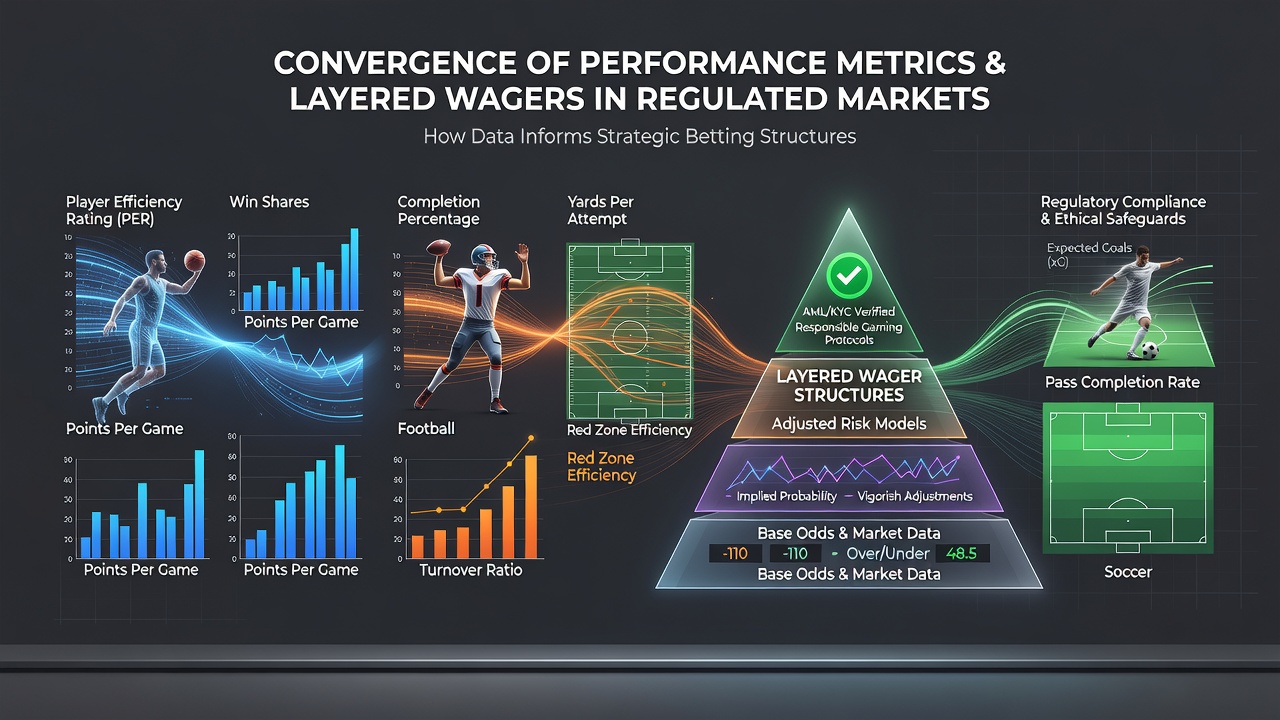
Cross-Disciplinary Performance Data Forming Layered Wager Architectures in Licensed Betting Markets
Analysts track player efficiency ratings, track times, serve percentages, and goal conversion rates across soccer pitches, racecourses, tennis courts, and basketball arenas because these indicators feed directly into multi-leg wager constructions that operate under licensed oversight frameworks. Data aggregation platforms combine historical and real-time figures so operators can price layered products such as accumulators, player props, and handicap markets with consistent risk parameters.
Metric Sources and Their Integration Pathways
Soccer leagues supply expected goals models and pressing intensity scores while horse racing contributes speed figures adjusted for track conditions and jockey weight allowances. Tennis datasets include first-serve win rates and return-game conversion percentages that shift according to surface and weather variables. Basketball contributes effective field-goal percentages, assist-to-turnover ratios, and pace-adjusted defensive metrics. Regulated operators merge these streams through centralized databases that normalize units across sports, allowing a single accumulator ticket to draw legs from each discipline without violating jurisdictional pricing rules.
Studies conducted by the University of Sydney’s Gambling Research Centre show that cross-sport correlation matrices reduce variance in payout projections when operators apply layered structures. The matrices identify periods when soccer goal tallies rise alongside tennis ace counts during summer tournaments, creating opportunities for combined legs that still respect house-edge limits set by licensing authorities.
Layered Structures in Practice
Layer one typically consists of primary performance thresholds such as a soccer team exceeding 1.8 expected goals or a horse posting a speed rating above its career average. Layer two adds conditional modifiers drawn from secondary metrics, for instance requiring the same soccer team to maintain a press intensity above 65 percent while the horse races on a firm surface. Layer three incorporates live adjustments that activate only if earlier legs succeed, such as a tennis player’s first-serve percentage climbing above 78 percent in a deciding set. These tiers appear in markets offered by operators holding licenses in multiple jurisdictions including Nevada and several Australian states, where regulators require transparent documentation of how each metric influences odds.

Reports released by the Nevada Gaming Control Board in August 2026 recorded a 14 percent increase in multi-sport accumulator handle compared with the same month in 2025, attributing the rise to operators’ adoption of unified data feeds that span four major sports. The same report noted that average hold percentages remained stable because layered pricing models incorporated real-time metric updates that prevented drift between posted odds and underlying probabilities.
Regulatory Oversight and Data Standards
Licensing bodies in both the United States and Australia mandate that operators maintain audit trails linking each wager leg to verifiable performance data. These requirements have prompted investment in third-party data providers whose feeds undergo periodic validation against league-supplied statistics. In practice this means a basketball points prop must reference official box-score data while a horse-racing speed figure must align with official timing systems before either can appear in a regulated accumulator.
Cross-border operators therefore maintain separate data pipelines for each licensed market, yet they share common normalization protocols that allow a single software layer to generate compliant odds across jurisdictions. Observers note that this architecture reduces duplication while preserving the distinct regulatory reporting obligations of each territory.
Case Examples from August 2026
During the opening weeks of August 2026, operators in licensed markets offered accumulators that paired English Premier League pre-season goal metrics with ATP hard-court ace rates and Australian thoroughbred sprint figures. One documented structure required a soccer side to post an expected-goals value above 2.1, a tennis player to win at least 42 percent of return points, and a racehorse to finish within 1.2 lengths of its best recent speed figure. Settlement occurred only after all three data sources received confirmation from their respective official scorers and timing authorities.
Industry associations such as the European Gaming and Betting Association have published guidelines that encourage operators to disclose the metric sources used in each layer so that customers and regulators can replicate pricing calculations. These guidelines emerged after earlier periods when discrepancies between data vendors created settlement disputes that required regulatory intervention.
Conclusion
Performance metrics drawn from soccer, horse racing, tennis, and basketball now converge through standardized data pipelines that support layered wager structures in markets subject to licensing and reporting requirements. Regulatory bodies in the United States and Australia continue to monitor how operators apply these metrics, while academic researchers track correlations that influence both product design and compliance frameworks. The architecture that results allows multi-leg products to draw from disparate sports while remaining within the risk and transparency parameters demanded by current oversight regimes.