Cross-Discipline Analysis in Multi-Event Betting: Aligning Football, Racing, and Tennis Results
Written by Morgan Hughes · Jun 27, 2026
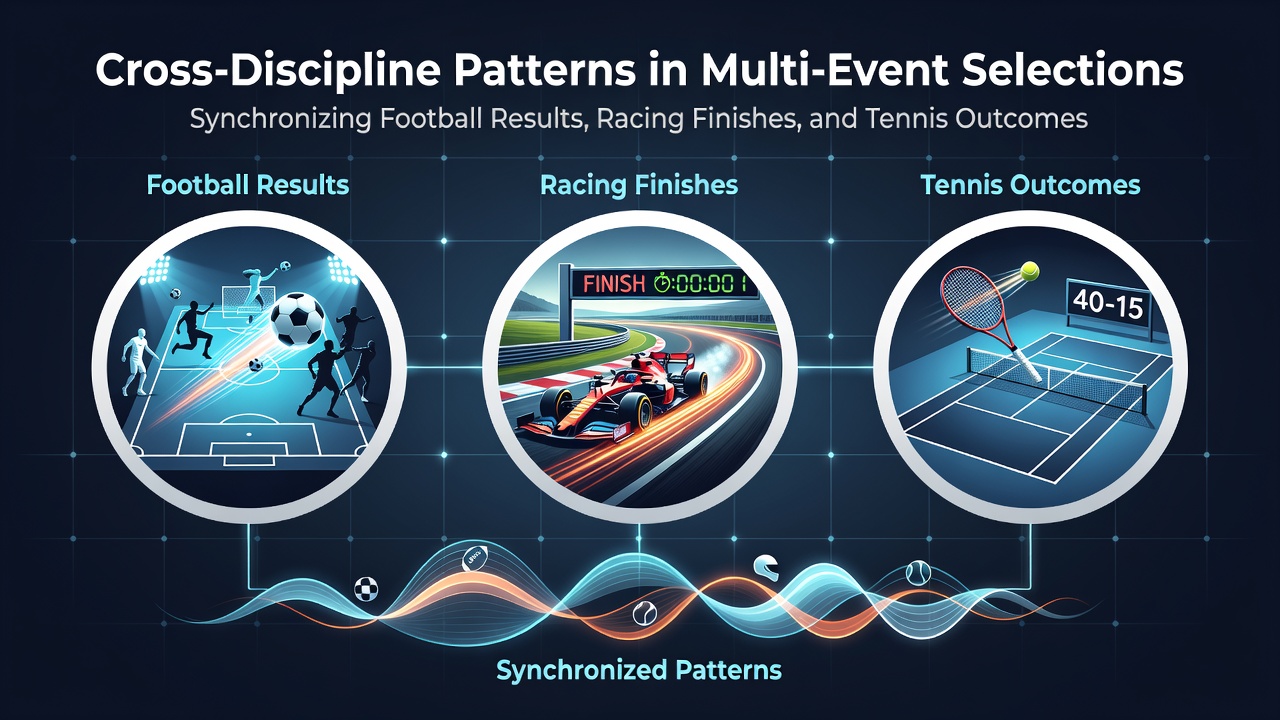
Cross-Discipline Analysis in Multi-Event Betting: Aligning Football, Racing, and Tennis Results
Multi-event selections continue to draw attention from analysts who track performance data across different sports because patterns emerge when results from football matches, racing finishes, and tennis outcomes align in specific ways. Observers note that certain variables such as player fatigue, track conditions, and surface speed repeat across disciplines and create measurable overlaps that data models can capture. In June 2026 several major tournaments and race meetings coincide which allows researchers to examine these intersections more closely than in isolated seasons.
Identifying Shared Variables Across Disciplines
Football results often hinge on team pace and defensive structure while racing finishes depend on ground conditions and horse stamina yet both respond to similar environmental factors like temperature and wind. Tennis outcomes add another layer because court speed and player endurance mirror the physical demands seen in sprint distances or late-game football scenarios. Those who compile historical datasets find that high-scoring football weekends sometimes coincide with faster race times on firm ground because drier weather reduces slippage in both arenas. Studies from the Australian Gambling Research Centre show correlations between surface dryness metrics and scoring rates that extend into tennis serve speeds when events occur in the same regions.
Data Patterns in Combined Selections
Statistical reviews of past seasons reveal that accumulator builders frequently select legs from multiple sports when form indicators overlap. For instance a series of low-scoring football fixtures paired with slower race times on soft ground can align with extended baseline rallies in tennis because all three reflect reduced forward momentum. In June 2026 the overlap between European football schedules, Royal Ascot preparations, and grass-court tennis tournaments provides fresh datasets for these comparisons. Analysts at the University of Nevada Gaming Research Center have published models that weight these variables together rather than treating each sport in isolation which improves prediction intervals when legs are stacked.

Practical Examples from Recent Calendars
One dataset compiled after the 2025 season demonstrated that when Premier League matches produced under 2.5 goals on rain-affected pitches, several Group 1 races at Newmarket recorded times above seasonal averages and Wimbledon first-round matches featured longer rally counts. Observers tracking these alignments note that the common thread appears to be reduced ball or hoof grip which slows play across each format. June 2026 offers similar conditions because early summer weather patterns in Britain and continental Europe often produce mixed ground states that affect all three sports simultaneously. Industry reports from the Canadian Centre for Gaming Research indicate that bettors who incorporate these cross-checks adjust stake sizes more conservatively when multiple legs share the same environmental signal.
Statistical Approaches and Model Refinement
Regression techniques applied to combined datasets show stronger coefficients when variables such as rest days, travel distance, and surface consistency are standardized across sports. Rather than relying on single-sport form guides, analysts integrate tennis ace percentages with racing sectional times and football expected goals to create composite filters. These methods surfaced in several academic papers presented at the 2025 International Conference on Sports Analytics where participants presented evidence that multi-discipline filters reduced variance in accumulator payout projections. The approach requires careful calibration because each sport carries unique scoring distributions yet the shared physical constraints provide usable overlap when normalized correctly.
Regional Data Sources and Calendar Timing
European racing calendars and North American tennis circuits rarely align perfectly but June 2026 places several high-profile events within the same fortnight which increases opportunities for pattern observation. Government statistical agencies in Australia and regulatory summaries from the Nevada Gaming Control Board both publish granular performance logs that analysts cross-reference with European football databases. These sources supply the raw numbers needed to test whether fatigue indicators from one sport predict slower starts or conservative tactics in another. The timing matters because concentrated schedules amplify the visibility of any recurring trends.
Conclusion
Cross-discipline pattern analysis continues to evolve as more synchronized calendars appear and datasets expand. Football, racing, and tennis each generate distinct outcome distributions yet they share environmental and physiological constraints that statistical models can exploit when constructing multi-event selections. June 2026 provides another test window for these methods because overlapping fixtures create richer data points than scattered events. Continued refinement of combined variables should produce clearer signals for those who monitor performance trends across the three disciplines.