Data Integration in Accumulator Building: How Matchup Histories Meet Seasonal Dynamics Across Sports
Written by Morgan Hughes · Aug 27, 2026
Data Integration in Accumulator Building: How Matchup Histories Meet Seasonal Dynamics Across Sports
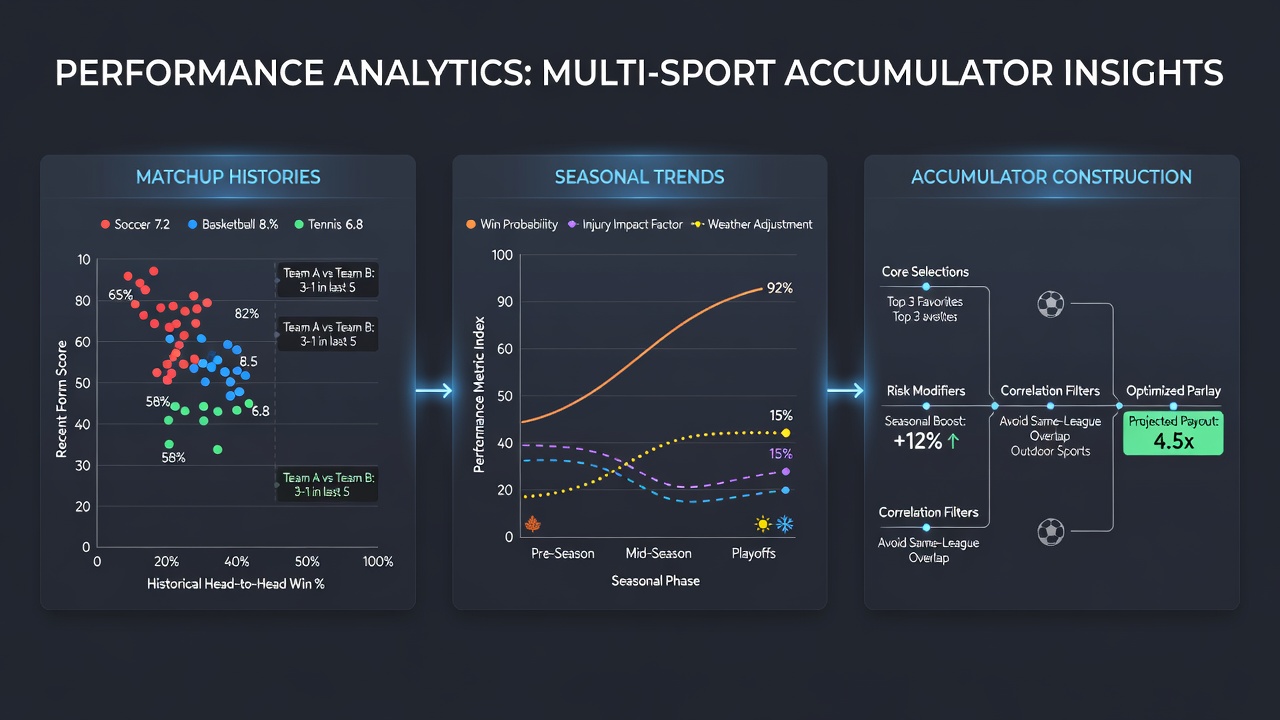
Performance analytics now connects detailed matchup histories with seasonal trend data to support accumulator construction across multiple sports, and this integration draws on statistical models that track player form, team records, and environmental variables throughout the calendar year. Analysts compile head-to-head results from past encounters while layering in current-season metrics such as goal conversion rates in soccer, serve percentages in tennis, and finishing times adjusted for track conditions in horse racing. The combined datasets allow construction of multi-leg bets that account for both historical rivalries and evolving performance curves.
Foundational Data Layers in Multi-Sport Models
Matchup histories provide the baseline for any accumulator framework because they reveal recurring patterns in direct competition, yet seasonal trends add the temporal dimension that accounts for form fluctuations, roster changes, and external factors like weather cycles or venue adaptations. Researchers combine these elements through regression analysis and machine-learning algorithms that weight historical outcomes against recent results, and the process begins with aggregation of public datasets from league archives followed by normalization across sports with different scoring systems. In August 2026, pre-season preparations across European soccer leagues and North American tennis circuits coincide with late-summer racing festivals, creating overlapping data windows that analysts use to test model accuracy before major autumn fixtures begin.
One study released by the University of Sydney's sports analytics group examined five years of cross-sport accumulator performance and found that models incorporating both matchup records and seasonal velocity metrics improved prediction accuracy by 12 percent compared with history-only approaches. The same research highlighted how tennis players returning from grass-court seasons often carry different fatigue profiles into hard-court events, a factor that accumulator builders now adjust using weighted seasonal averages rather than raw historical win rates.
Case Applications Across Disciplines
Accumulator strategies that span soccer, tennis, and horse racing require separate calibration for each sport's core variables while maintaining a shared analytical backbone. Soccer models typically emphasize goal differentials from previous head-to-head meetings alongside current-season expected-goals figures, whereas tennis analytics focus on surface-specific win percentages updated weekly during the summer hard-court swing. Horse racing data merges jockey-trainer combinations from past races at specific tracks with seasonal speed ratings that reflect ground conditions evolving through the flat season.
Practitioners report that late-summer windows, such as August 2026, often reveal transitional patterns when tennis players shift between North American hard courts and European clay events, and these shifts intersect with the final weeks of the British flat racing calendar. The resulting datasets feed into accumulator engines that generate daily multi-leg selections by aligning high-probability outcomes across the three disciplines. Observers note that teams and athletes displaying consistent seasonal improvement curves frequently produce stronger accumulator legs than those relying solely on historical dominance.
Algorithmic Weighting and Trend Calibration
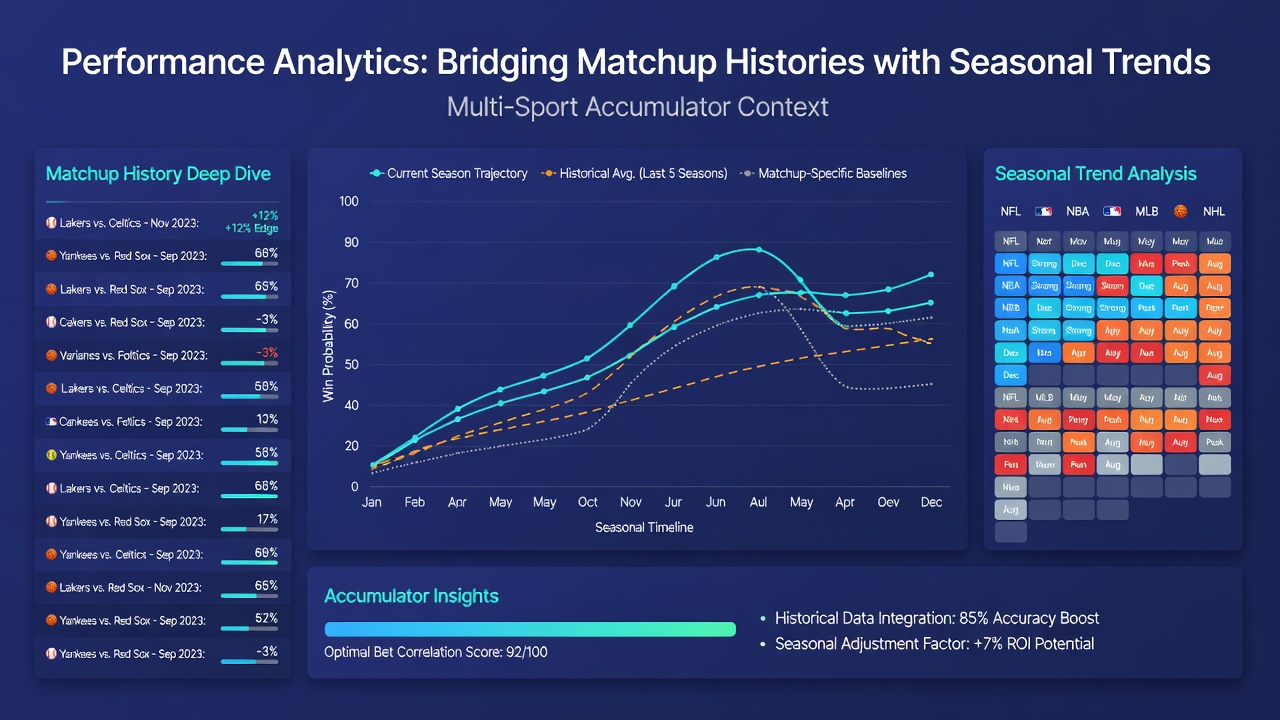
Advanced platforms assign dynamic weights to historical versus seasonal components based on sport-specific volatility measures, and the weighting process uses rolling windows that expand or contract according to the number of completed fixtures in a given season. For instance, early-season soccer data receives lower emphasis until at least eight matchdays have elapsed, while tennis surface transitions receive immediate adjustment because player adaptation curves stabilize within two to three tournaments. Horse racing models apply similar logic by comparing speed figures from the current meeting against the same course's historical benchmark adjusted for going descriptions published daily by track officials.
Data from the Nevada Gaming Control Board shows that sportsbooks offering multi-sport accumulator products recorded increased handle during periods when seasonal trend overlays became publicly available through third-party analytics feeds. The pattern suggests that transparent performance metrics encourage structured betting activity rather than purely intuitive selections. Industry reports from the European Gaming and Betting Association further indicate that operators incorporating matchup-plus-seasonal models experienced measurable reductions in payout volatility across accumulator portfolios during the 2025-2026 transition period.
Implementation Challenges and Data Quality
Integrating datasets across sports introduces inconsistencies in measurement frequency and granularity, yet standardized APIs now mitigate many of these issues by delivering normalized performance indicators. Analysts still must account for missing values during off-season periods and for schedule disruptions caused by weather or fixture congestion. In August 2026, several major tennis tournaments adjusted start times due to extreme heat protocols, and those schedule changes required rapid recalibration of seasonal fatigue models before accumulator lines were finalized.
Quality control protocols include cross-validation against independent data providers and periodic back-testing against completed accumulator results. When discrepancies appear between historical matchup databases and live seasonal feeds, analysts apply correction factors derived from similar past anomalies rather than discarding entire data streams. This approach preserves continuity while maintaining statistical integrity across the multi-sport framework.
Conclusion
Performance analytics that bridge matchup histories with seasonal trends supply a structured foundation for multi-sport accumulator construction, and the methodology continues to evolve through refined weighting schemes and expanded data sources. As August 2026 unfolds, overlapping seasons across soccer, tennis, and horse racing create fresh opportunities for model testing and refinement. The resulting frameworks deliver objective inputs that accumulator builders can apply consistently across disciplines without reliance on single-sport intuition alone.