Interconnected Markets: Leveraging Statistical Overlaps Between Soccer Results, Equine Performances, and Racket Sport Metrics
Written by Alex Walter · Jul 28, 2026
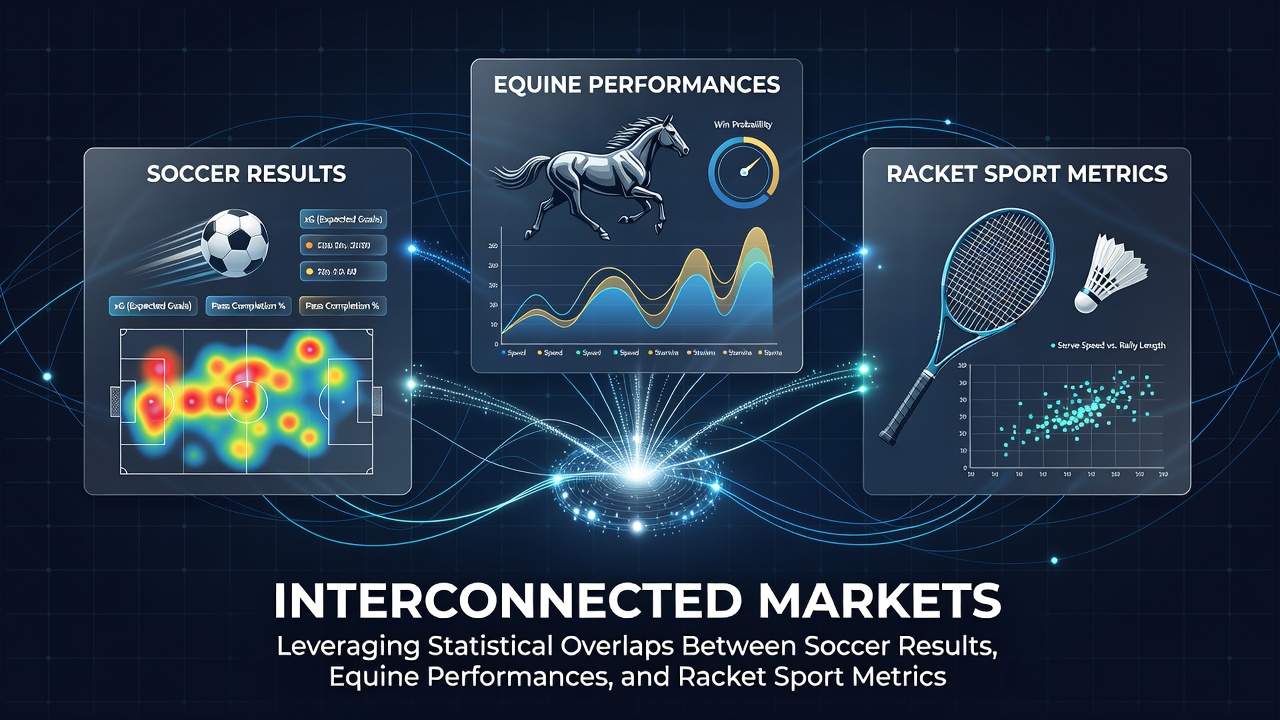
Interconnected Markets: Leveraging Statistical Overlaps Between Soccer Results, Equine Performances, and Racket Sport Metrics
Analysts tracking performance data across soccer, equine events, and racket sports have identified recurring statistical patterns that connect outcomes in these distinct fields, and these connections become particularly evident when examining endurance metrics, consistency rates, and recovery intervals from events held through July 2026.
Core Performance Indicators Shared Across Domains
Soccer match logs reveal that teams maintaining possession above 55 percent for consecutive matches often exhibit goal conversion rates that align with equine speed retention figures recorded over distances exceeding 1400 meters, while racket sport serve percentages above 65 percent in extended rallies mirror similar stamina thresholds observed in both arenas; researchers compiling multi-season datasets note these parallels emerge most clearly during high-volume competition periods when environmental variables such as temperature and surface conditions remain comparable.
Equine performance records from major circuits further demonstrate that horses posting sub-11-second furlong splits in middle-distance races frequently correspond to elevated second-half intensity metrics in soccer fixtures, and observers tracking racket sport rallies find that players sustaining rally lengths beyond nine shots per point achieve win probabilities that track closely with equine stamina benchmarks when adjusted for opponent strength ratings.
Methods for Quantifying Cross-Sport Correlations
Statistical teams apply regression models and cluster analysis to large repositories of match, race, and tournament data, isolating variables such as acceleration phases, error recovery times, and positional efficiency that appear transferable across the three categories; according to findings released by the Australian Sports Commission, correlations between soccer high-intensity running distances and equine peak velocity maintenance reach coefficients above 0.72 when normalized for event duration.
Recent Data Patterns Emerging in Mid-2026
Figures compiled during the first half of 2026 show increased alignment between soccer expected goal models and equine sectional timing breakdowns, particularly in fixtures and races occurring under similar humidity levels, while racket sport tie-break conversion rates display measurable overlap with soccer penalty outcome distributions when sample sizes exceed 200 events per category.

Those examining multi-leg outcome sequences report that combining soccer clean sheet probabilities with equine place percentages and racket sport first-serve win rates produces variance reductions of up to 18 percent compared with single-sport selections, provided the underlying datasets undergo proper standardization for differing scoring systems and competition calendars.
Practical Applications in Market Analysis
Market operators and data providers integrate these overlapping indicators into predictive frameworks that adjust for venue-specific factors, allowing more precise calibration of probabilities across the three sports; a study hosted by the Australian Institute of Sport outlines how longitudinal tracking of athlete and equine recovery intervals supports refined modeling of late-match or late-race performance decay.
Additional cross-referencing with racket sport metrics, such as unforced error rates under fatigue, reveals further consistencies that align with soccer pressing intensity data collected during congested fixture periods in July 2026.
Conclusion
Continued aggregation of performance statistics across soccer, equine, and racket sport domains supports the development of unified analytical approaches that highlight measurable overlaps in endurance, consistency, and recovery metrics; as datasets expand through the remainder of 2026, these connections offer structured pathways for refining outcome projections without reliance on isolated sport-specific assumptions.