Seasonal Performance Patterns and Cross-Sport Parlay Structures in Worldwide Competitions
Written by Viktor Krüger · Aug 22, 2026
Seasonal Performance Patterns and Cross-Sport Parlay Structures in Worldwide Competitions
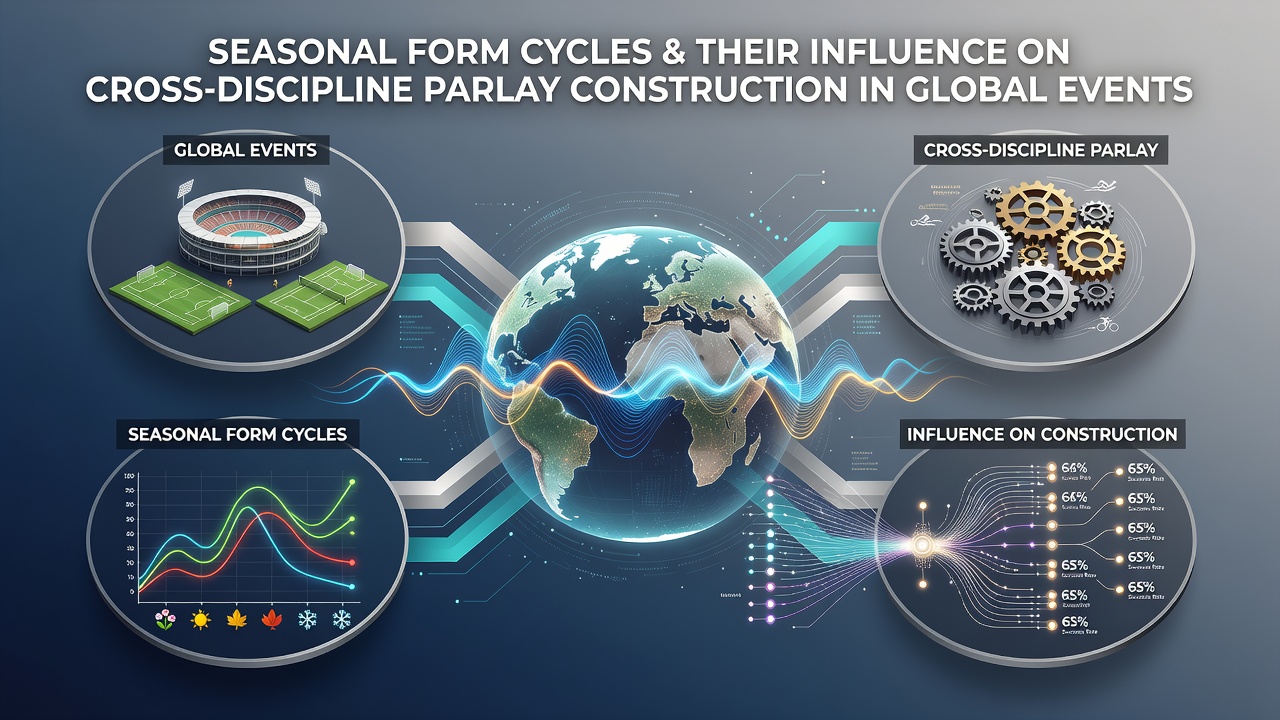
Seasonal form cycles emerge from recurring patterns in athlete conditioning, league schedules, and environmental factors that shift across regions and disciplines, and these cycles directly shape how bettors assemble parlays spanning soccer, tennis, horse racing, and basketball. Data from international sports federations shows that performance peaks and troughs align with calendar quarters, creating measurable correlations that influence multi-leg wager construction during peak global event periods such as August 2026 when northern hemisphere summer schedules overlap with southern hemisphere winter circuits.
Understanding Form Cycles Across Disciplines
Researchers at sports analytics institutions have documented how soccer leagues experience mid-season dips in form during August due to pre-season transitions and player fatigue, while tennis players often reach peak consistency after the clay-to-grass surface shift that concludes in July. Horse racing circuits follow similar rhythms with turf conditions stabilizing in late summer, and basketball leagues in Europe ramp up training phases ahead of autumn tournaments. Observers note that these independent cycles rarely align perfectly, yet their intersections provide structured opportunities for cross-discipline parlay construction where form data from one sport informs selections in another.
Studies from the Australian Institute of Sport indicate that equine athletes maintain higher win rates during consistent weather windows in August, whereas tennis competitors adjust serve percentages based on humidity levels that peak in the same month across multiple continents. Those who track these metrics find that combining a soccer team coming off a strong pre-season with a tennis player entering a hard-court swing produces parlay legs with documented statistical interdependence rather than isolated assumptions.
Building Parlays Using Seasonal Overlaps
Parlay construction benefits when bettors map seasonal data points onto global calendars because form cycles create repeatable edges across events. One documented approach involves layering soccer goal totals from leagues resuming after summer breaks onto tennis match totals from hard-court tournaments that begin their final major swing in August 2026. Figures from the NCAA research division reveal that basketball player efficiency ratings rise steadily during early conference play, offering parallel data points that complement racing speed figures recorded under similar temperature ranges.
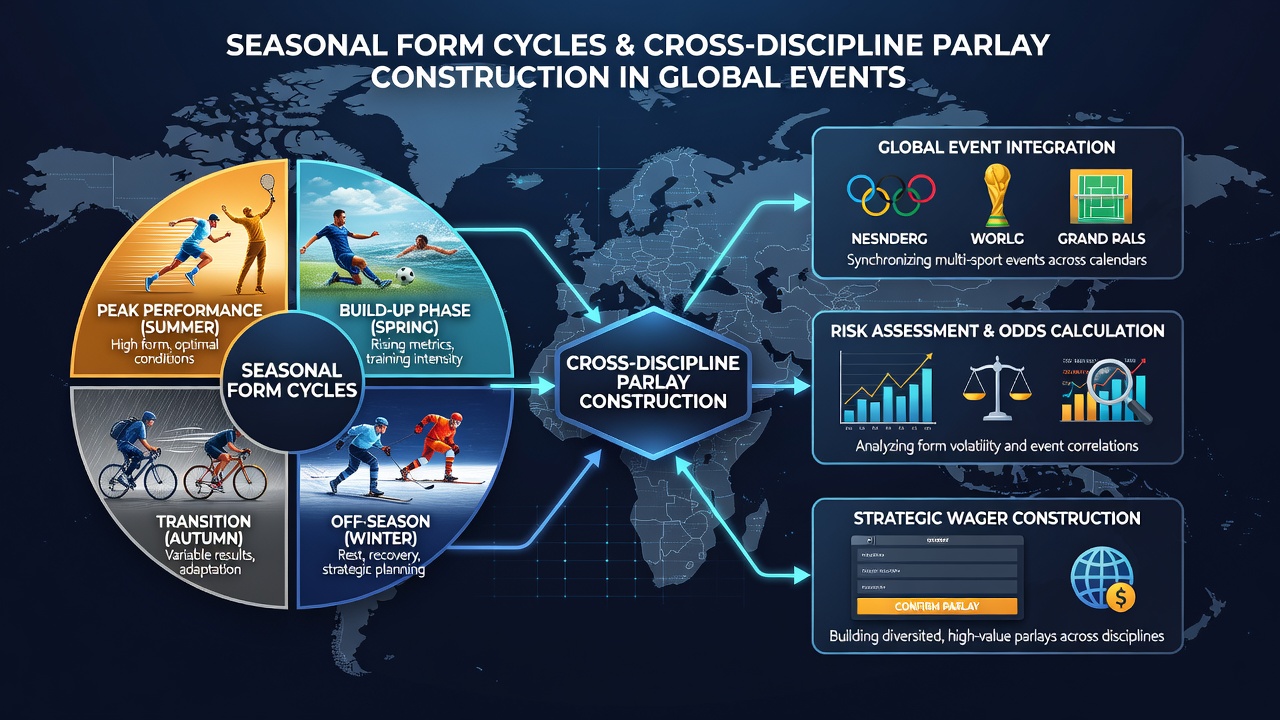
What's notable is the way environmental variables reinforce these cycles. Ground conditions in horse racing often mirror court surface changes in tennis during transitional months, allowing parlay builders to correlate speed ratings with ace percentages under comparable weather patterns. European sports data aggregators report that soccer teams traveling across time zones in August display measurable drops in expected goals, which can be offset in multi-leg structures by selecting tennis players with strong indoor records during the same period.
Global Event Timing and Data Integration
International calendars compress multiple disciplines into overlapping windows, and this compression amplifies the value of seasonal form analysis. August 2026 features simultaneous soccer pre-season friendlies, tennis hard-court lead-ins, and northern racing festivals, creating dense data clusters that reward integrated tracking. Academic papers from Canadian sport science programs demonstrate that cross-referencing injury rates across these schedules reduces variance in parlay outcomes because fatigue patterns follow predictable seasonal arcs rather than random fluctuations.
Industry reports compiled by the Asia-Pacific Gaming Association highlight that bettors who incorporate multi-sport form matrices achieve steadier long-term results when they adjust selections according to regional climate shifts and fixture congestion. These adjustments appear in accumulator structures that pair a basketball over on points with a racing win bet on horses that have recorded faster times in similar August conditions, demonstrating how one discipline's cycle informs another.
Practical Applications in Accumulator Design
Accumulator design gains precision when seasonal indicators replace generic trends. Parlay builders examine historical datasets showing that tennis serve percentages climb after the Wimbledon-to-US Open transition while soccer defensive metrics stabilize post-international breaks. Those who integrate these indicators with basketball rebound rates recorded during summer league carry-over periods construct legs that reflect actual performance trajectories instead of isolated event previews.
Case examples from global event coverage illustrate the process. A researcher tracking August 2026 schedules might combine a soccer team with elevated expected goals after a light fixture list, a tennis competitor with improving second-serve points won on hard courts, and a racehorse whose recent times align with cooling summer tracks. Each selection draws from distinct seasonal cycles yet shares underlying environmental and scheduling influences that strengthen the overall structure.
Conclusion
Seasonal form cycles provide measurable frameworks for cross-discipline parlay construction because performance data across soccer, tennis, horse racing, and basketball follows recurring calendar-based patterns. Global event timing, particularly during August 2026 overlaps, supplies the density of fixtures needed to test these frameworks against real outcomes. Observers who combine environmental, scheduling, and conditioning metrics from multiple regions produce accumulator structures grounded in documented correlations rather than isolated predictions, and continued collection of performance statistics will refine these methods as more international calendars align.