Seasonal Shift Patterns: How Changing Daylight Hours Influence Accumulator Outcomes in Outdoor Sports Betting
Written by Alex Krüger · Jul 18, 2026
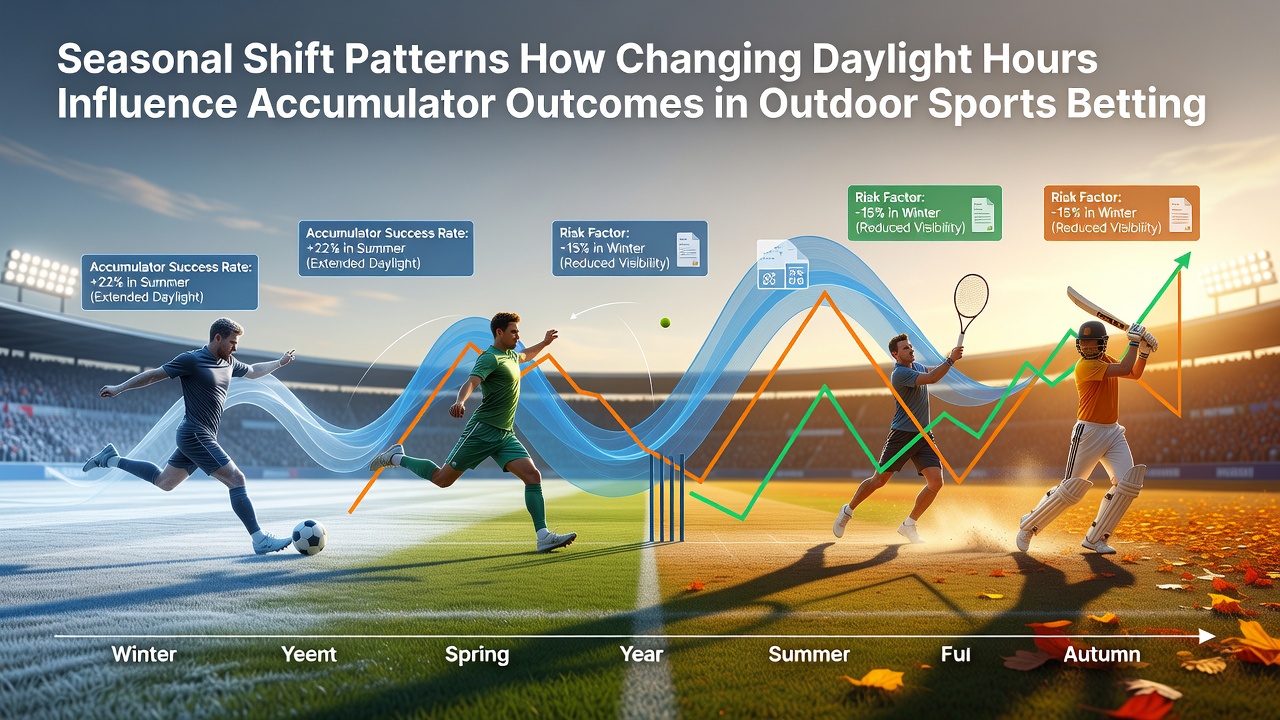
Seasonal Shift Patterns: How Changing Daylight Hours Influence Accumulator Outcomes in Outdoor Sports Betting
Daylight hours expand and contract with the Earth's tilt, creating measurable shifts in when outdoor events unfold and how conditions evolve during play, which in turn shapes the data points that feed into accumulator selections across soccer, tennis, and horse racing. Researchers tracking fixture lists note that summer months extend evening kickoffs in northern leagues, while winter compresses schedules into earlier slots, altering fatigue profiles and environmental variables that historically correlate with scoring rates and margins.
Daylight Cycles and Fixture Timing Adjustments
League calendars respond directly to these cycles, with governing bodies scheduling matches around available natural light to reduce artificial lighting costs and meet broadcast demands, so bettors compiling accumulators encounter different game windows each quarter. Data from meteorological agencies shows July 2026 will feature peak daylight in the northern hemisphere, stretching twilight past 10pm in many UK and European venues and pushing soccer matches later into the evening when temperatures drop and dew forms on pitches. Those compiling multi-leg bets therefore review historical performance splits for late-start games, noting that teams accustomed to earlier slots sometimes post lower possession numbers under extended light conditions.
Effects on Soccer Accumulator Components
Soccer leagues provide the clearest examples of how shifting light influences goal tallies and clean-sheet probabilities that appear in accumulator legs. Summer fixtures often begin after 8pm when residual heat lingers yet visibility remains high, leading analysts to track increased second-half goal rates in matches played under these extended conditions. Studies published by the National Institutes of Health link longer daylight exposure to modest rises in player work rate during the opening 30 minutes, after which hydration factors begin to dominate. Bettors constructing accumulators therefore cross-reference fixture start times wth player workload data rather than relying solely on form tables.
Tennis and Court-Side Light Variables
Tennis schedules at outdoor Grand Slam events adjust start times around daylight availability, creating afternoon and evening sessions where shadow length and sun angle affect ball visibility and serve effectiveness. Observers compiling accumulators that include tennis legs examine historical ace percentages during twilight periods, when lower sun angles produce longer shadows across courts and alter returner positioning. Research coordinated through the Australian Institute of Sport demonstrates that serve speeds remain consistent while rally lengths shorten slightly under low-angle light, a pattern that surfaces most clearly in July when many European clay-court events coincide with maximum daylight duration.
Horse Racing Track Illumination and Race Day Scheduling
Racecourses schedule evening meetings during periods of extended daylight, allowing more races per card without floodlights and thereby increasing the number of betting opportunities available for accumulator builders. Ground conditions evolve differently under prolonged sun exposure, with turf firmness ratings shifting later in the day as moisture evaporates, a factor that influences speed figures used in multi-race selections. Those studying seasonal patterns reference records from the Environment and Climate Change Canada showing how daylight length correlates with temperature-driven track drying rates across comparable latitudes.
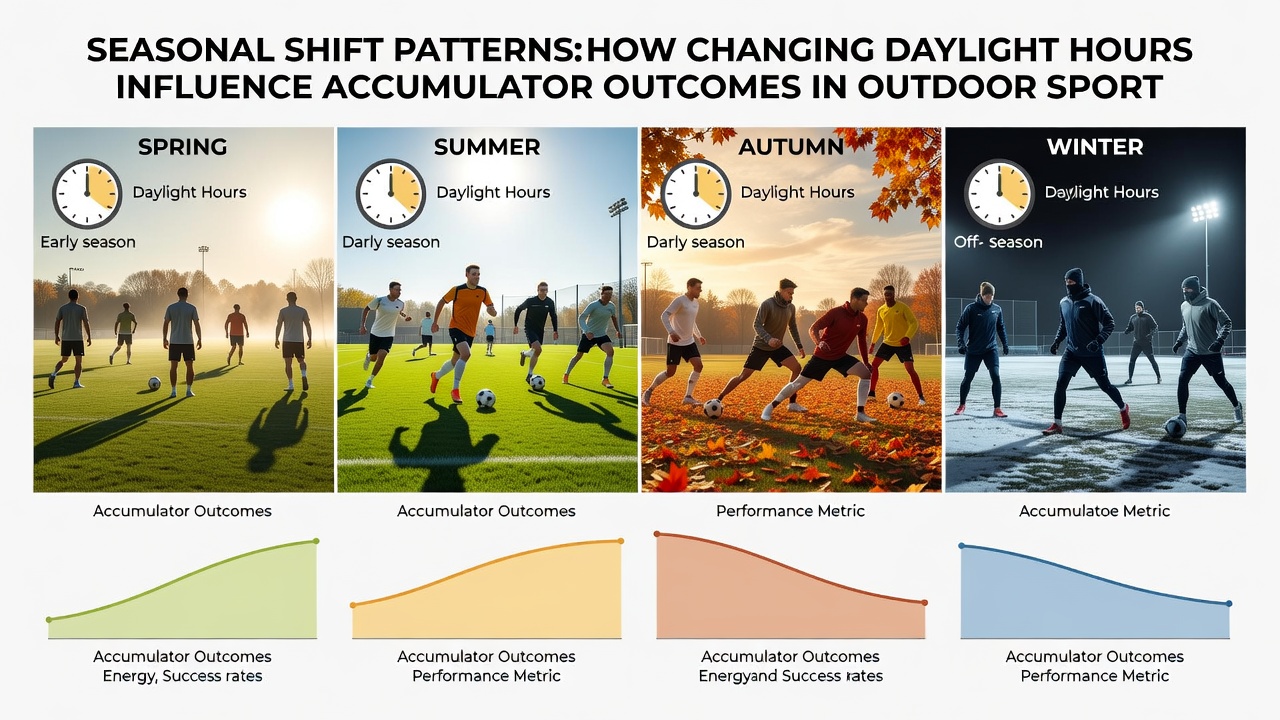
Accumulator Construction Under Seasonal Light Shifts
Accumulator builders integrate these variables by weighting selections according to historical splits for time-of-day and month, rather than applying uniform team ratings across the calendar year. Software tools now incorporate solar angle data alongside traditional stats, allowing filters that isolate matches played after 8pm in July versus March fixtures that begin before sunset. Patterns emerge most clearly in combined soccer-tennis-racing accumulators where each leg reflects the same seasonal light window, reducing variance introduced by mismatched environmental conditions. July 2026 schedules will test these models once again as peak daylight coincides with major tournaments and festival meetings, generating fresh datasets for pattern refinement.
Conclusion
Seasonal daylight variations produce consistent, trackable effects on outdoor sports schedules, player outputs, and surface conditions that accumulator strategies must accommodate through time-specific analysis. Data from multiple sports demonstrates that ignoring these shifts introduces systematic bias into multi-leg selections, whereas incorporating fixture timing and solar metrics improves alignment with observed results. As July 2026 approaches, the expanded daylight window will again supply new evidence on how these environmental factors interact with betting outcomes across the major outdoor codes.